

By Dr. Vamani Reddy, BDS, MDS | Paediatric Dentist, Manikonda, Hyderabad
Last reviewed: November 2026 | Dr. Vamani’s Dental Clinic, Bharath Plaza, Manikonda, Hyderabad
In this article
- What tongue tie in babies actually is
- Signs that may point to a tongue tie
- Why many babies with a tongue tie need nothing
- Start with a feeding assessment, not surgery
- When surgery for tongue tie in babies makes sense
- A note for mothers: this is not your fault
- Questions to ask before agreeing to surgery for tongue tie in babies
- How the release is done
- Risks, and what I tell parents honestly
- Recovery and aftercare
- Tongue tie in older children
- What affects the cost of tongue tie surgery in Hyderabad
- Tongue tie in babies in Hyderabad: where to start
- Frequently asked questions (FAQs)
- The short version
Tongue tie in babies worries many new parents. A relative mentions it, a friend’s baby had it cut, and suddenly every feeding problem looks like a tongue tie. I want to give you a calm and honest picture.
The truth sits in the middle. Some babies really do need a small procedure. Many do not. This guide explains how to tell the difference, what the procedure involves, and where to start if you are in Hyderabad.
What tongue tie in babies actually is
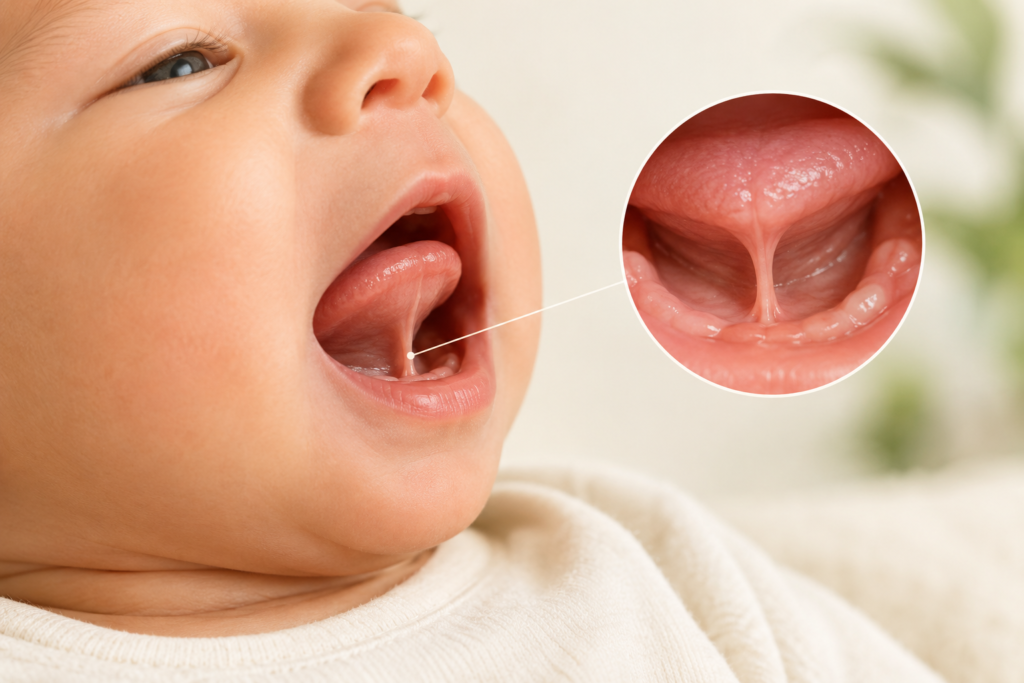
Under your baby’s tongue there is a thin band of tissue called the frenulum. In a tongue tie, medically called ankyloglossia, that band is shorter or tighter than usual. It limits how far the tongue can lift and move.
Severity varies a lot. In some babies the band is a thin strand. In others it reaches the tip of the tongue and gives it a heart shape. A band further back is called a posterior tie. It can restrict movement just as much but is harder to see.
Signs that may point to a tongue tie
Feeding is where most parents notice a problem. Your baby may struggle to latch or keep slipping off the breast. You may hear clicking sounds during feeds.
Other signs include very long or very frequent feeds, poor weight gain, and coughing or spluttering at the breast. Mothers often have sore, cracked or painful nipples.
Please remember that none of these signs proves a tongue tie. A shallow latch, reflux and low milk supply can look exactly the same. That is why a proper assessment matters more than a first impression.
Why many babies with a tongue tie need nothing
Many babies with a tongue tie feed perfectly well. NHS guidance and the NCT both say this. If feeding is going smoothly and your baby is gaining weight, there is nothing to fix.
The American Academy of Pediatric Dentistry (AAPD) goes further. It finds no evidence to support cutting a tongue tie in a baby who has no feeding difficulty. A tie that is simply visible is not a reason for surgery.
Start with a feeding assessment, not surgery
If feeding is a struggle, the first step is a proper feeding assessment. A lactation consultant or another trained feeding professional watches a full feed. They check the latch and your baby’s position.
Often a change in position or a deeper latch makes a real difference. For bottle-fed babies, paced bottle feeding can help. The AAPD says comprehensive lactation support should come first.
I also want your paediatrician to rule out other causes. Airway problems and some other conditions can affect feeding too. As a dentist, my part is to examine the tongue and the tie. Judging a mother’s feeding technique is not my role.
When surgery for tongue tie in babies makes sense
A release may be worth considering when three things come together. The baby has a restrictive tie. There are real feeding problems, such as poor weight gain, painful feeds or constant slipping off the breast. And those problems continue despite proper lactation support.
In that situation a small procedure can help. It does not guarantee better feeding, and some babies still need support afterwards. I explain this clearly to every family before we decide anything.
A note for mothers: this is not your fault
Painful feeds can make a mother feel she is failing. She is not. Tongue tie in babies is a matter of anatomy and has nothing to do with how hard you try.
Feeding problems are also exhausting. Please do not wait until you are at breaking point to ask for help. Support for you matters as much as the assessment for your baby.
Questions to ask before agreeing to surgery for tongue tie in babies
You are entitled to clear answers from any clinician, including me. These questions help you judge whether a release is really the right step.
Has a feeding professional watched a full feed? What exactly did you find when you examined the tongue? Is the tie restricting movement, or does it only look tight?
Which technique will you use, and why? What are the risks for my baby? What aftercare do you recommend, and who do I call if I am worried?
Finally, ask what happens if feeding does not improve. A good clinician will have an honest answer and a plan.
How the release is done
A release is called a frenotomy or a frenectomy. The tight band is cut with sterile scissors or a laser. Both methods are accepted. The cut itself takes only a few seconds.
In very young babies the procedure is often done without an injection. Numbing gel is not recommended for newborns because of a rare risk to how the blood carries oxygen. Most babies cry briefly and settle quickly, often with a feed.
Your baby should also have had the vitamin K injection given at birth. Any clinician should confirm this before a release, because it helps the blood clot.
Risks, and what I tell parents honestly
Releasing a tongue tie in babies is a small procedure, but it is still a procedure. Bleeding is the most common concern. Ulcers, swelling, infection and irritability can also happen.
A review of eight studies found problems in about 4 in 100 babies. Most were minor. The NCT notes that a second procedure is needed in about 2 cases in 100.
I also want you to know that the evidence is limited. The AAPD describes its recommendations as conditional and based on very low certainty evidence. That is why I would rather assess carefully than cut quickly.
Recovery and aftercare
A small white patch under the tongue is normal for the first couple of days. It is part of healing and not a sign of infection. Feeding may take up to two weeks to improve.
Call the clinic at once if bleeding will not stop. Call too if you see fever, redness or swelling, or if your baby refuses to feed and seems unusually sleepy.
Aftercare is the part where clinicians differ. Some recommend gentle stretching exercises and some do not. The AAPD says exercises are not routinely recommended, and that doing them only partly has been linked to problems. So I give each family a clear plan and ask you to follow it exactly.
Keep seeking feeding support after the release. Treating tongue tie in babies works best alongside help with latch, not instead of it.
Tongue tie in older children
Not every tongue tie is found in infancy. Some children are diagnosed at three, five or ten because of concerns about speech, eating or cleaning the teeth.
Many children with a tongue tie speak perfectly clearly. If you are worried about speech, a speech and language therapist should assess your child first. A release is considered when the tie clearly limits movement and affects function.
A tight tongue can also make it hard to lick the lips, clear food from the teeth or move the tongue during orthodontic treatment. In those cases we can plan a release alongside braces or aligners. Older children have the procedure under local anaesthetic.
What affects the cost of tongue tie surgery in Hyderabad
Many parents search for the cost first. I would rather explain what drives it than quote a figure that may not apply to your baby.
The main factors are your child’s age, the technique used, and whether an assessment or a follow-up visit is needed. Feeding support from a lactation consultant is a separate cost.
Call the clinic with your baby’s age and what you are seeing. We will tell you what to expect before you decide anything.
Tongue tie in babies in Hyderabad: where to start
If you are worried, start with your baby’s paediatrician. Ask whether a lactation consultant can watch a feed. If a tie is suspected and feeding problems continue, come for a dental assessment.
Our clinic is at Bharath Plaza in Manikonda, on the Narsingi to Puppalaguda main road. We are open Monday, Tuesday and Thursday to Sunday from 10:30 am to 8 pm. We are closed on Wednesdays.
You can read more about the procedure on our tongue tie surgery page and our frenectomy page.
Frequently asked questions (FAQs)
Does every baby with a tongue tie need surgery?
No. Many babies with a tongue tie feed well and need nothing. Surgery is considered only when the tie causes real feeding problems that continue despite proper support.
At what age can a tongue tie be treated?
A release can be done in newborns, babies and older children. The method and the type of anaesthesia depend on age. I will explain your options once I have examined your child.
Is tongue tie surgery painful for a baby?
Most babies cry briefly and settle quickly, often with a feed. The cut itself takes seconds. Older children have the procedure under local anaesthetic, so they do not feel pain during it.
Will tongue tie in babies affect speech later?
Many children with a tongue tie speak clearly. If you have speech concerns, a speech therapist can assess your child. A release is considered only if the tie limits movement.
Can a tongue tie grow back?
Sometimes the tissue heals tightly again, and a second procedure is needed in about 2 cases in 100. Following the aftercare plan carefully matters.
How soon will feeding improve after a release?
Some mothers notice a change within days. For others it takes up to two weeks. Keep seeking feeding support during that time.
The short version
Tongue tie in babies is common and often harmless. Many babies need nothing. Start with a feeding assessment. Consider a release only when a restrictive tie causes real feeding problems that continue despite support. If you are in Hyderabad and want an opinion, call the clinic.
Worried about a tongue tie in your baby or child?
A short assessment shows whether a tie is affecting feeding or movement. Call the clinic and we will explain your options before you decide anything.
Explore: Tongue Tie Surgery | Frenectomy | Preventive Dental Treatment